Chinese Inches and the Imperial Inch. Why are there two kinds of ‘Inches’?

Chinese inches

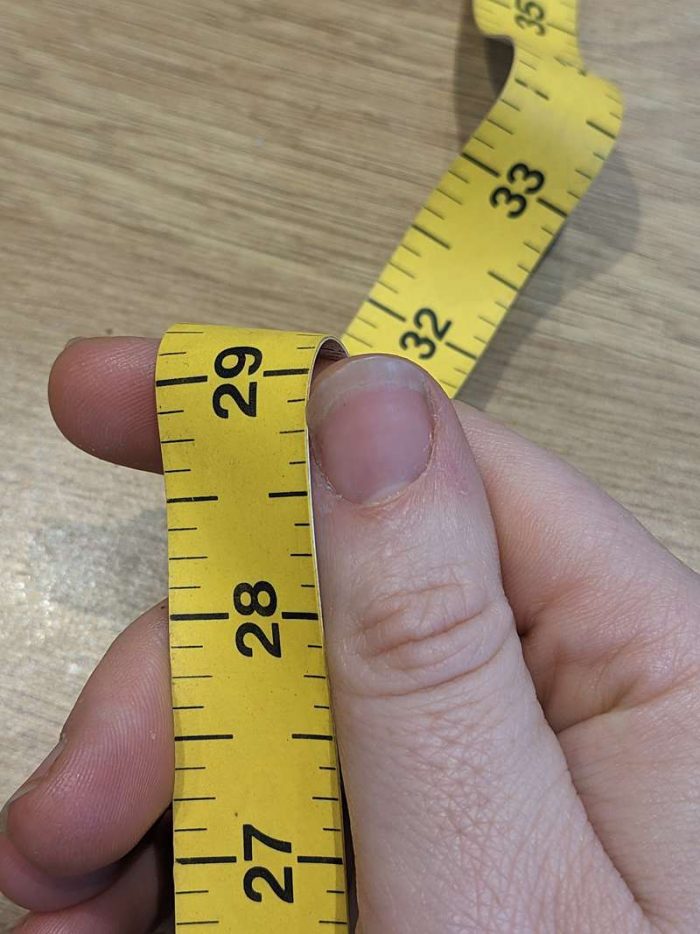
For anyone puzzled as to why there are two kinds of inches, two measurements both called inches but not the same. You may have come across a tape measure with ‘inches’ that seemed a little off. These are most likely Chinese or cùn not a western inch, Though very similar a cùn is in fact 1.312 inches, so slightly longer.
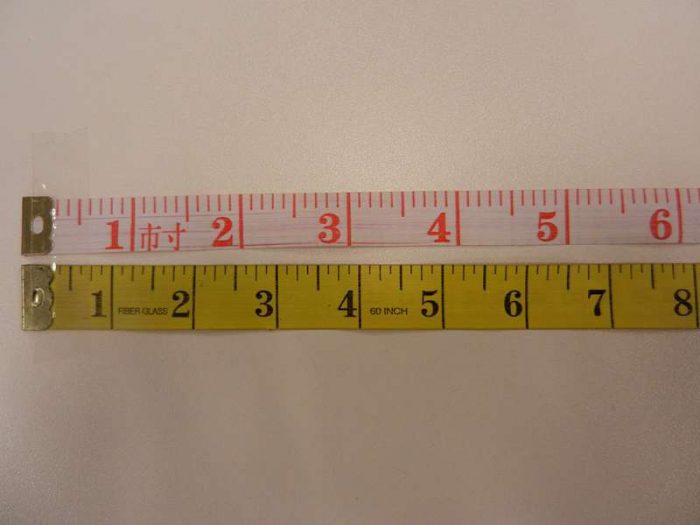
Chinese and imperial inch measuring tapes side by side comparison
The Chinese cùn (top) is slightly longer than an international standard inch (beneath) but it looks very similar leading to a muddle in many cases

The history of the Imperial/American or International Inch

In almost all countries of the world people invented measuring systems based on units that matched various body parts. In Europe many countries used a ‘foot’ (which is is obvious what it matches), an ‘inch’ which is the length of the last section of a man’s thumb (or it’s width across the top), a yard is a stride length etc etc.
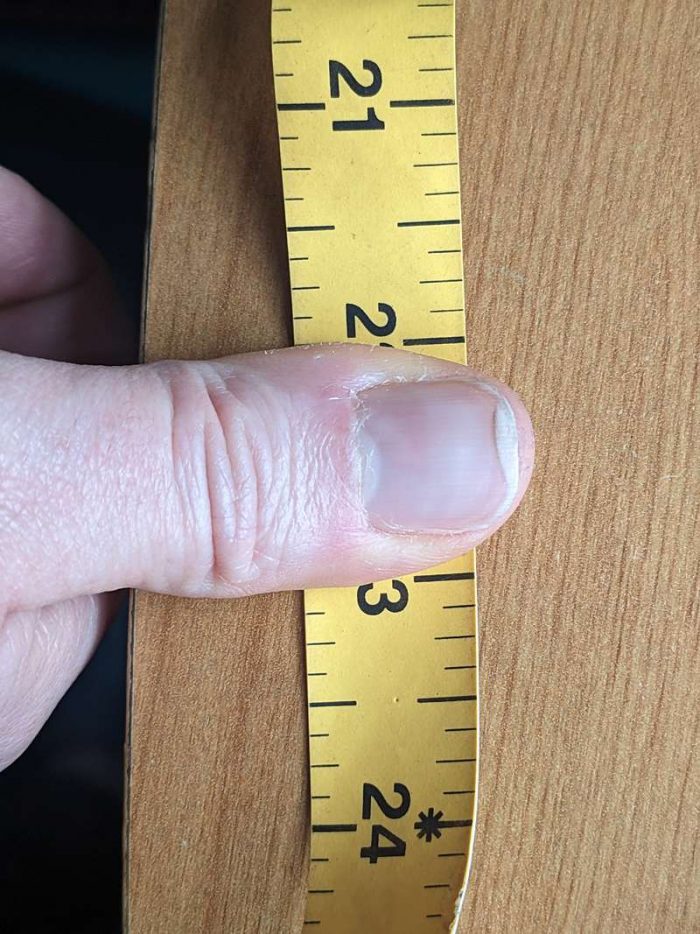
Of course different people have different length feet/thumbs/strides but given almost no one owned any sort of marked measure like a ruler it was a basic system that anyone could use if they owned a body and be vaguely in the right ball park. Gradually the measurements would get standardised with a King or government passing laws and saying a yard is ‘THIS’ long , often with a metal stick stuck in a wall for everyone to come and measure off to create their own ‘yardstick’ and then make rulers from there.
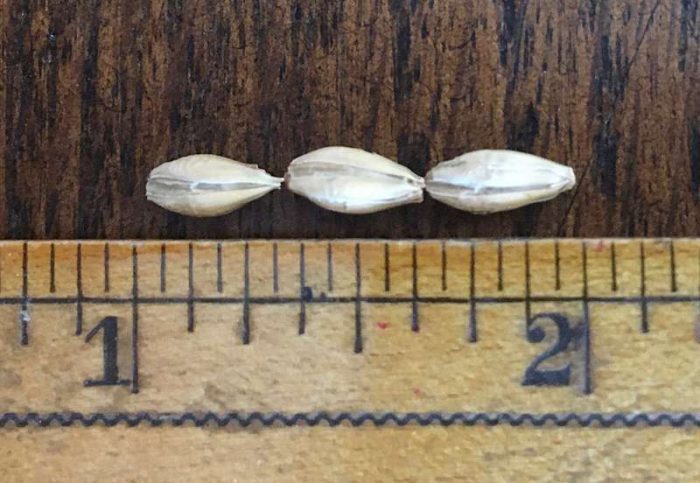
three barley corn kernels laid alongside an imperial inch ruler

In England in 1324 King Edward II (not yet the UK then!) defined the length of an inch in law as ‘three barleycorns laid end to end. But different countries standardised to slightly different yards/inches etc. So for much of history there were many more than two kinds of inches!

Standardising the Inch

Over time all of Europe got on the same measuring system (until metric came along) but in rest of the world other systems remained, slightly different from ours but often also based on various body part measurements or other accessible and reliable things from nature.

The inch we use in the west is variously called the Imperial Inch (in the UK), the American Inch (in the US) or the International Inch (rest of the world) and was standardised by international agreement on 1st July 1959 in terms of the metric system to 25.4mm.

Chinese inches

When Europeans encountered far east counties the explorers and diplomats saw the native measuring systems often with various units very similar to the ones they used in Europe. In the case of encountering the Chinese measuring system Europeans asked ‘what’s this’ – and translated the word for the Chinese measurement that is closest to our inch as ‘inch’ though the Chinese word is “Yīngcùn” (shortened to cùn, just as we usually write cm not centimetres each time).

The cùn was also based a man’s thumb, but on the width across the knuckle, not the length or the width of the top, so it is a slightly wider unit.

Measuring going wrong with Chinese Inches

I first heard of the ‘Chinese inch’ in a bra measuring forum where women who measure up at home but get odd sizing are often encouraged to go back and check their measuring tape. With the rise of easy international trade and cheap shipping it’s common to find the tape measure you have ordered is in fact Chinese Cun (translated as inches still, though not the same) and not a standard international/Imperial inch measure at all. This can lead to mistakes and frustration. Language, culture and fashion are three of my main interests so researching and sharing why we have two kinds of inches was an obvious activity for me. To read more history of fashion and culture articles I have written head over to my blog page.

Hooray for the variety that shows how similar we all are

I’m glad the Chinese never felt the need to change their 1000’s of year old standard measuring system to match the Western system(s). Their system has as much right to exist and be used. But because we all own bodies; and historically based our measuring system on those bodies; and some explorers translated ‘Yīngcùn” as ‘inch’: it can lead to mistakes, unless you know to check your measuring tape!

Add a comment...

Your email is never published or shared. Required fields are marked *

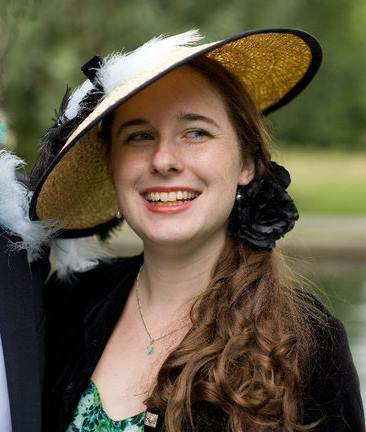
felicity westmacott wearing a hat

Felicity Westmacott

I write about all aspects of weddings, dressmaking, fashion history, and the human relation to clothing. I welcome comments and debate.

pinterest icon
instagram logo
twitter icon

Recent Portfolio entries

Read More
follow me on instagram@felicitywestmacott

When you have two bespoke wedding dresses on your sample rail that are perfect for both Elphaba and Glinda, and with Wicked For Good having come out, it felt rude not to!

Wicked has done an amazing job of bringing bright, bold fashion back to our attention, which is so exciting. But I've had many Elphaba and Glinda brides way before they came to the big screen. Brides who are up for going on an adventure with me to conjure up their perfect wedding look. 

I might not be the Wizard of Oz, but I am the Dress Alchemist after all 😉

(shout out to my social media manager, Elodie, for stepping in and being the Elphaba to my Glinda. If you're looking for your own magical media witch, you can find them at www.brightbeemedia.co.uk)
The dress on the stand vs. the dress in action✨

I made the Poinsettia dress last Christmas for my window display. I never would have predicted that it would be spotted by Rosie, who then bought it and wore it for the 2025 Miss Great Britain pageant!

My bespoke designs have been used for all sorts of events. Weddings mainly (obviously), but parties, anniversaries and proms too. But this might be the first time one of my gowns has been seen on the stage of a pageant. And doesn't Rosie look so serenely glamorous? The perfect model for this sparkly, elegant dress. And she placed in the top 10. Well done Rosie!
You might’ve noticed that I can get quite particular about language. I think it’s important, especially when that word can carry a lot of meaning. When words get misused, you as a consumer might get mis-sold something.

An example of this is the word ‘vintage’, which now gets tacked onto the description of any garment, whether or not it actually is vintage. Often the item just looks like it’s from an older period of fashion, and for many sellers now, that’s good enough to warrant the label ‘vintage’ (which it’s not).

‘Bespoke’ is another of those words. The word comes from ‘to bespeak’, which means, to ask for. Like someone walking into carpentry workshop and asking for something completely new to be made to their exact specifications.

Anything can be bespoke, if it has been asked for, to be made especially to your requirements and preferences. You often hear it in the context of bespoke suits, but the term doesn’t belong to any one industry.

When it comes to wedding dresses, you have a few options. Off-the-peg, which is what it sounds like. Then there’s custom or made-to-measure, which both describe when something is adjusted or changed. You might order a dress where there are options to customise the length, the sleeves, the neckline etc. 

But true bespoke is something different. It’s a dress that’s been designed and made completely from scratch. Completely to your measurements and your ideas. With several stages of fittings and adjustments, to ensure it’s exactly how you want it. It’s an entirely unique garment, and this is why the price of a bespoke dress can be so much more than something off-the-peg or made-to-measure.

So, next time something online claims to be ‘bespoke’, now you know what to look for to make sure you’re not being tricked into pay more for less.
Tonight is the Wedding Industry Awards! I'm in the running for two awards, which is all very exciting! 🏆

Since it's such a special occasion, I decided to design and make myself a dress. That way, regardless of the outcome, I'll feel like a winner. I rarely have time to make myself anything, so this felt rather lovely.

I used some gorgeous pink coloured silk chiffon, lined with pale gold silk satin, finished off with velvet ribbon. I started making the dress at 11am yesterday, and I finished it at 3pm today. Now I just have to finish making the bolero to go with it as well. I think we're gonna make it! 🏃🏻‍♀️
emailme@felicitywestmacott.co.ukTEL 07762 543230TOUCHGet in
from design to completionbespoke wedding dressesFelicity Westmacott
Dorking, RH4 1RT241 High Street• Visit the Studio •
emailme@felicitywestmacott.co.ukTEL 07762 543230TOUCHGet in